Leadership training is most effective when it’s supported by the right conditions.
The Four Pillars framework helps organisations understand those conditions, so development translates into real performance.
Organisations often invest in leadership training but don’t always see the impact they expect. This isn’t a reflection of the quality of the training, it’s because development is usually aimed at individuals, while performance is shaped by the system they work in.
That’s where our approach is different. Using the Four Pillars framework, we help you see where your system is supporting performance, and where it is quietly working against it. With that clarity, leadership capability and behaviours can be developed in a way that is genuinely aligned to your goals and the realities of your organisation.
Introducing the model
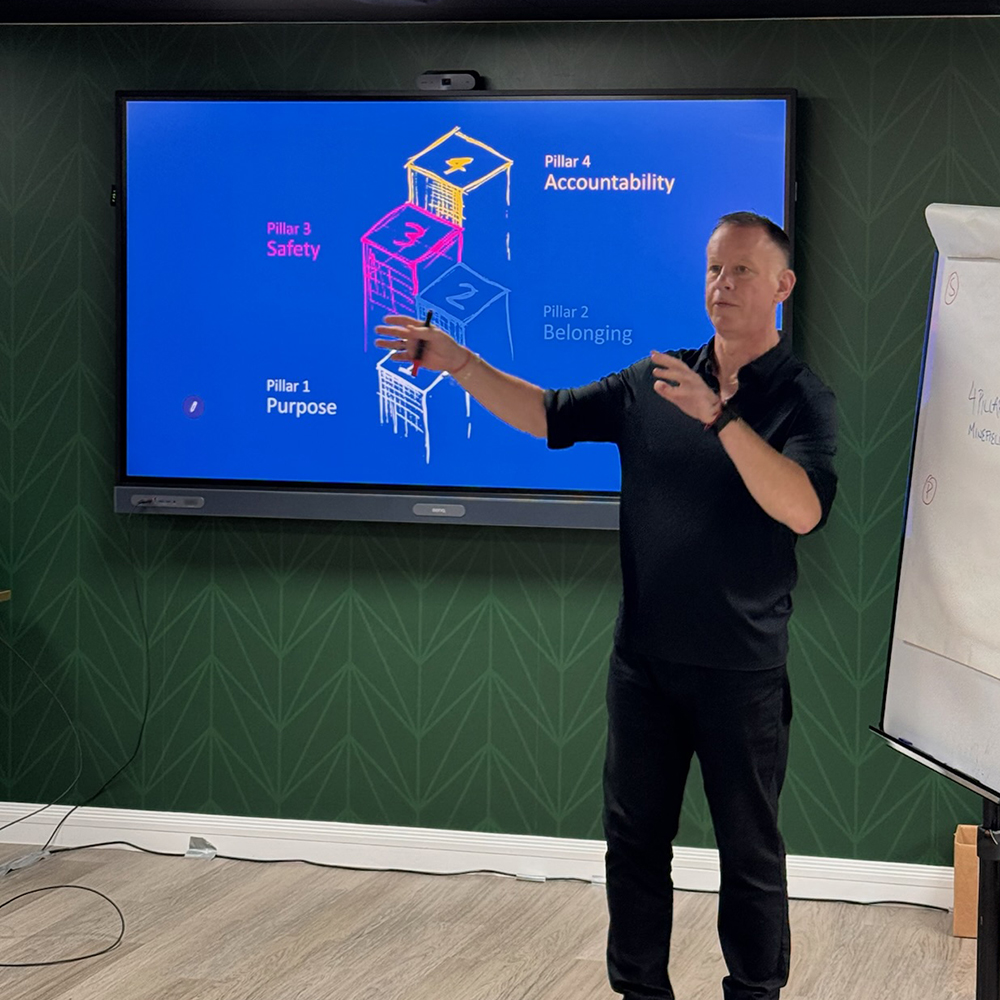
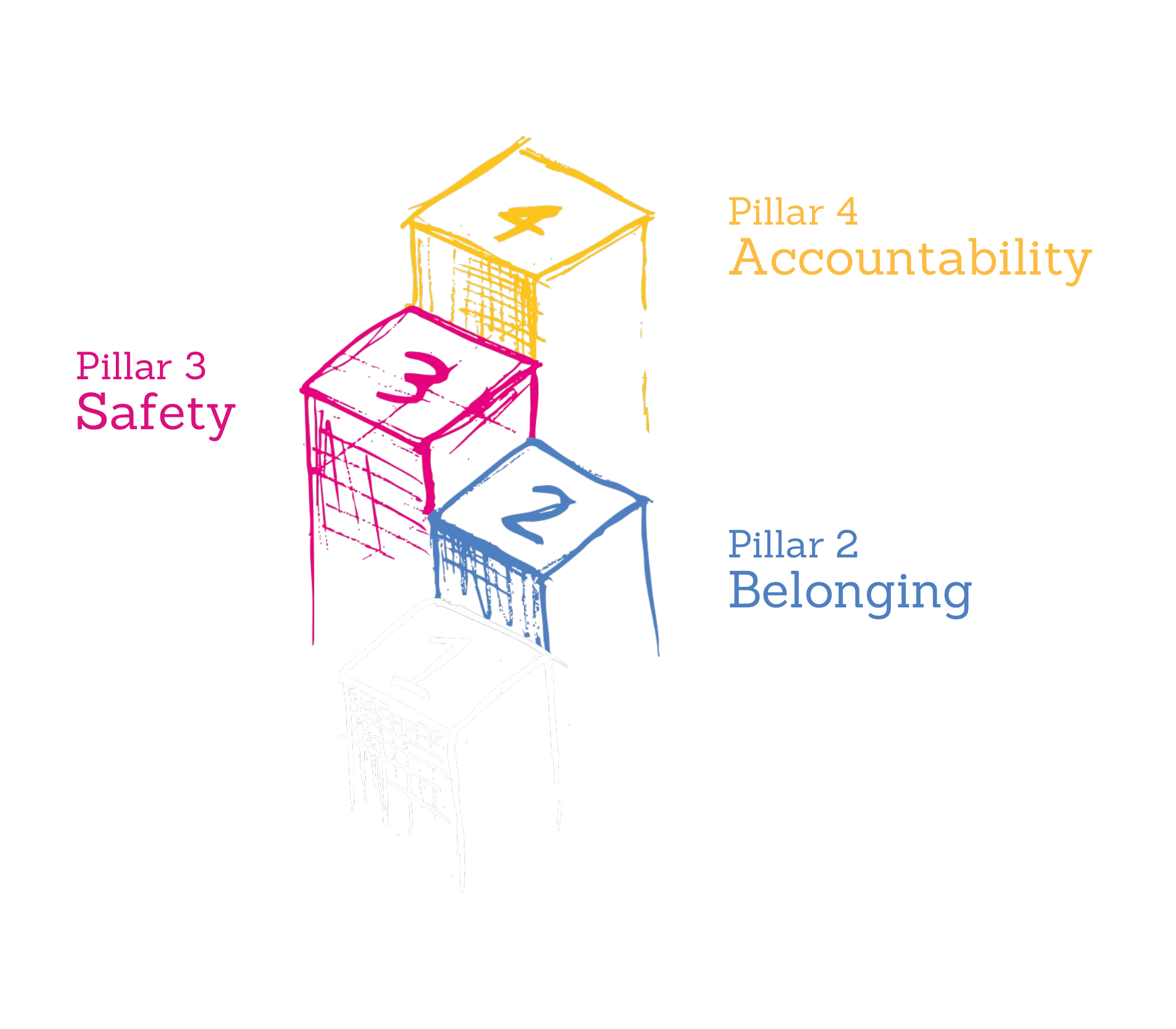
Through years of research and of working with leaders across different sectors, we’ve identified four conditions that need to be present, and in balance — to create the right environment for consistently high performance.
These are the Performance Pillars ©: the conditions that need to be in place for people and teams to perform well.
The Four Performance Pillars ©

Purpose
Direction people believe in
A shared understanding of why the work matters and where you’re heading. When purpose is clear, people can prioritise, decide, and act with intent, not just effort.
Belonging
People know they matter
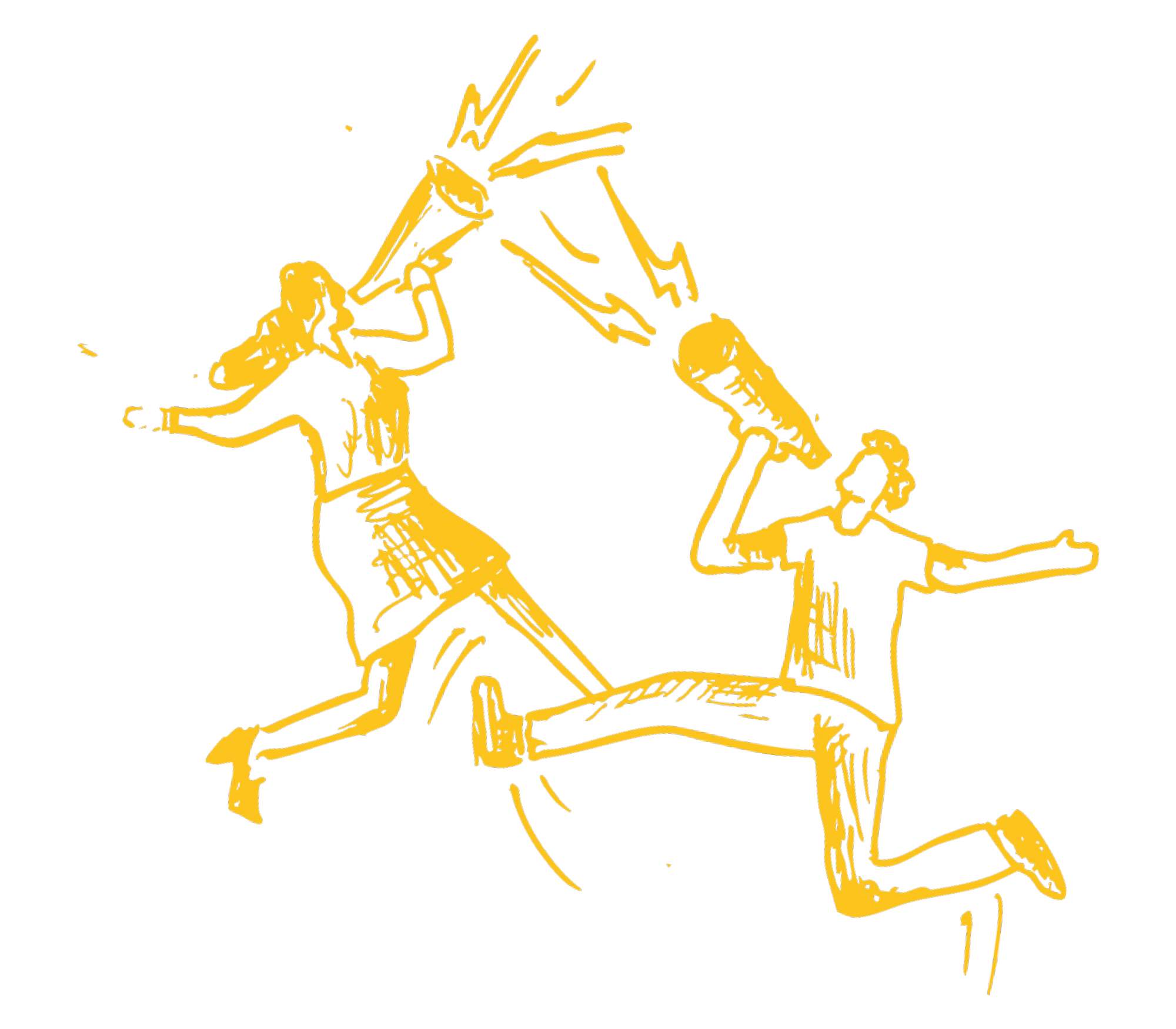
The sense that your contribution is valued and that you’re part of something bigger. Belonging is what turns individual effort into collective strength.
Safety
It’s safe to speak the truth
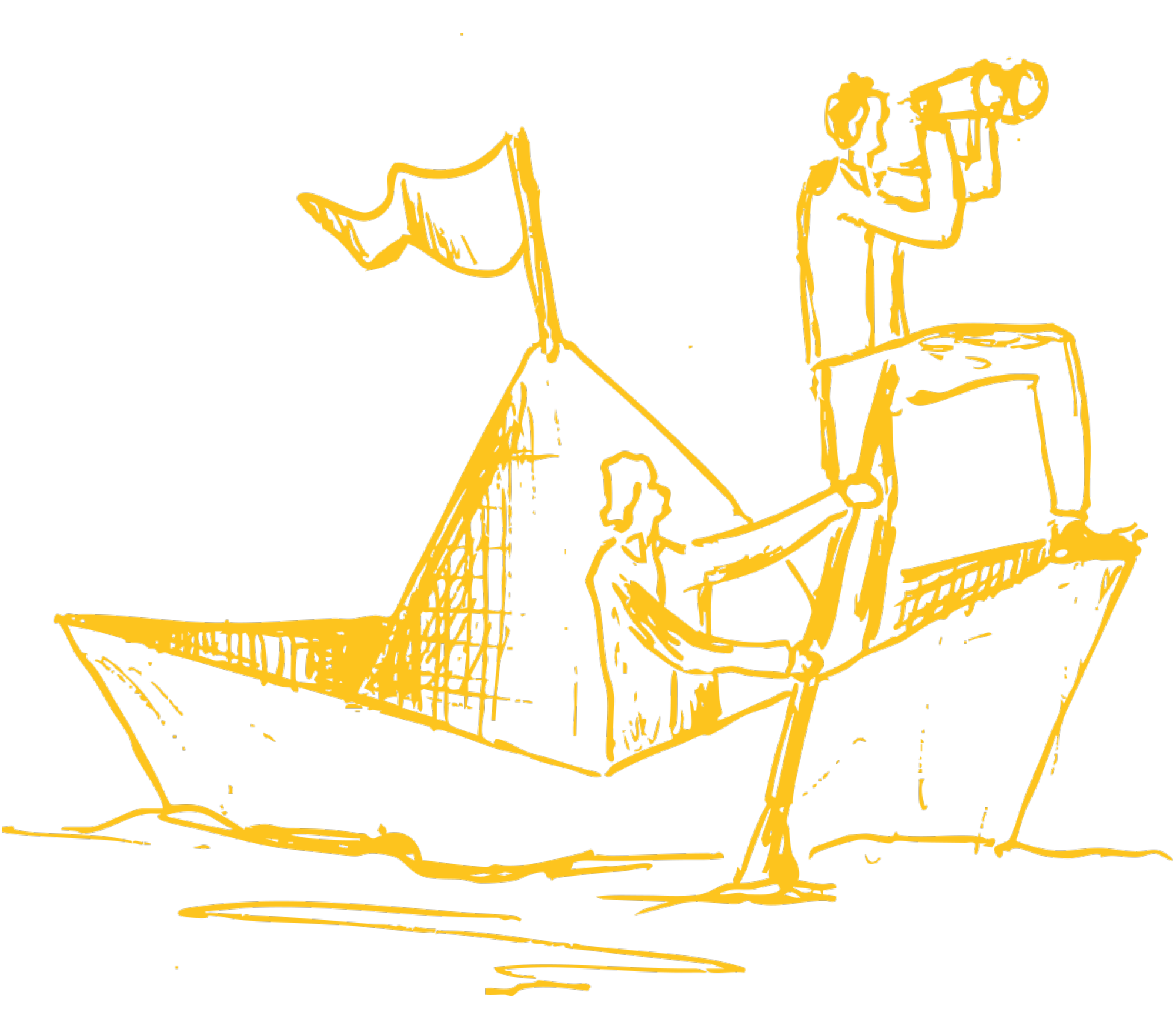
The confidence to raise concerns, challenge thinking, admit mistakes and ask for help. Safety enables learning, adaptation and improvement, especially under pressure.
Accountability
Ownership without blame
Clear ownership of outcomes, honest follow through, and shared responsibility. Accountability turns good intent into delivery, without fear or finger pointing.
How the Pillars Work Together
The four pillars work as a system. Their relative strength and balance shape how work actually gets done day to day.
Purpose → Belonging and Safety → Accountability
(Direction → Contribution and Candour → Delivery)
When some pillars are strong and others weaker, that imbalance drives the behaviours, decisions and results you experience, often without realising why. This is why similar issues keep showing up, even when capable people are committed and well intentioned.
What This Looks Like in Practice
Over time, we see recognisable patterns when certain pillars are strong and others are underdeveloped.
Common patterns when two pillars are strong
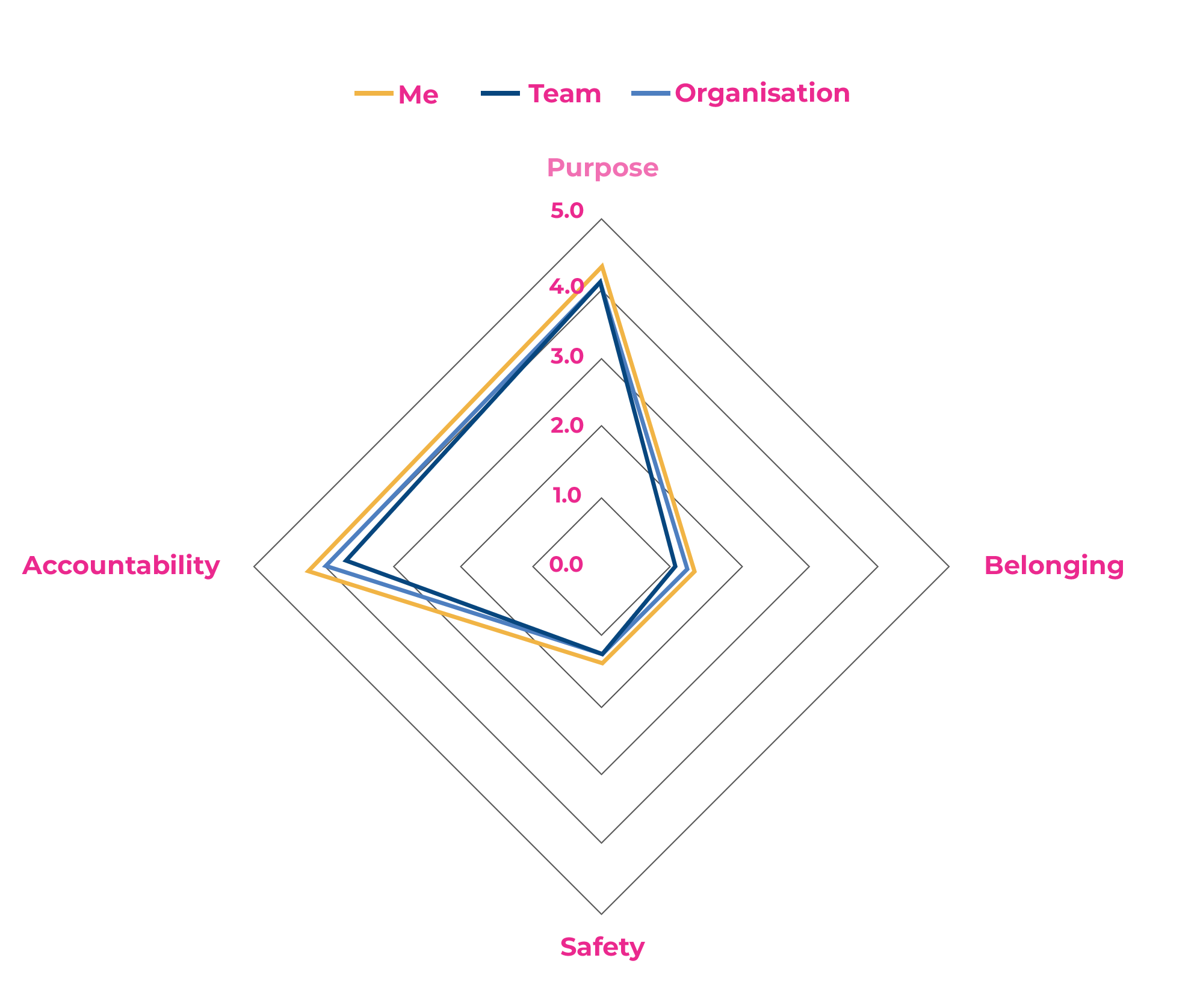
Purpose and Accountability
(with weaker Belonging and Safety)
Clear direction and strong execution, but challenge is constrained. Work gets done and standards are met, yet people tend to comply rather than question. Feedback is limited, risks surface late, and learning often happens only after something goes wrong.
Quick pattern: Efficient but fear driven; people don’t challenge.
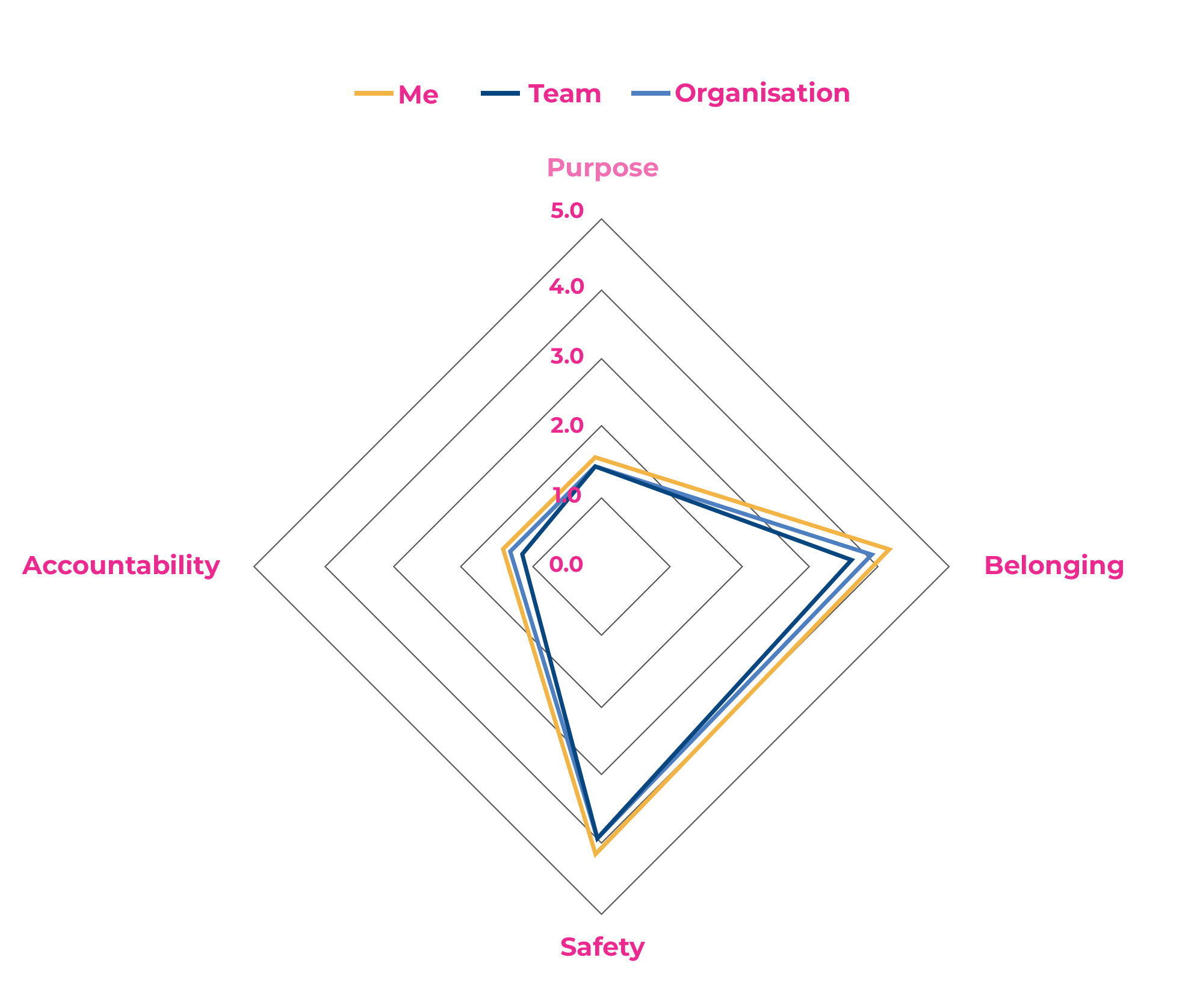
Belonging and Safety
(with weaker Purpose and Accountability)
Supportive, trusting teams, but weak focus and follow through. People care about each other and collaborate well, yet priorities drift, decisions stall, and results don’t reflect the effort being invested.
Quick pattern: Great teamwork, weak results.
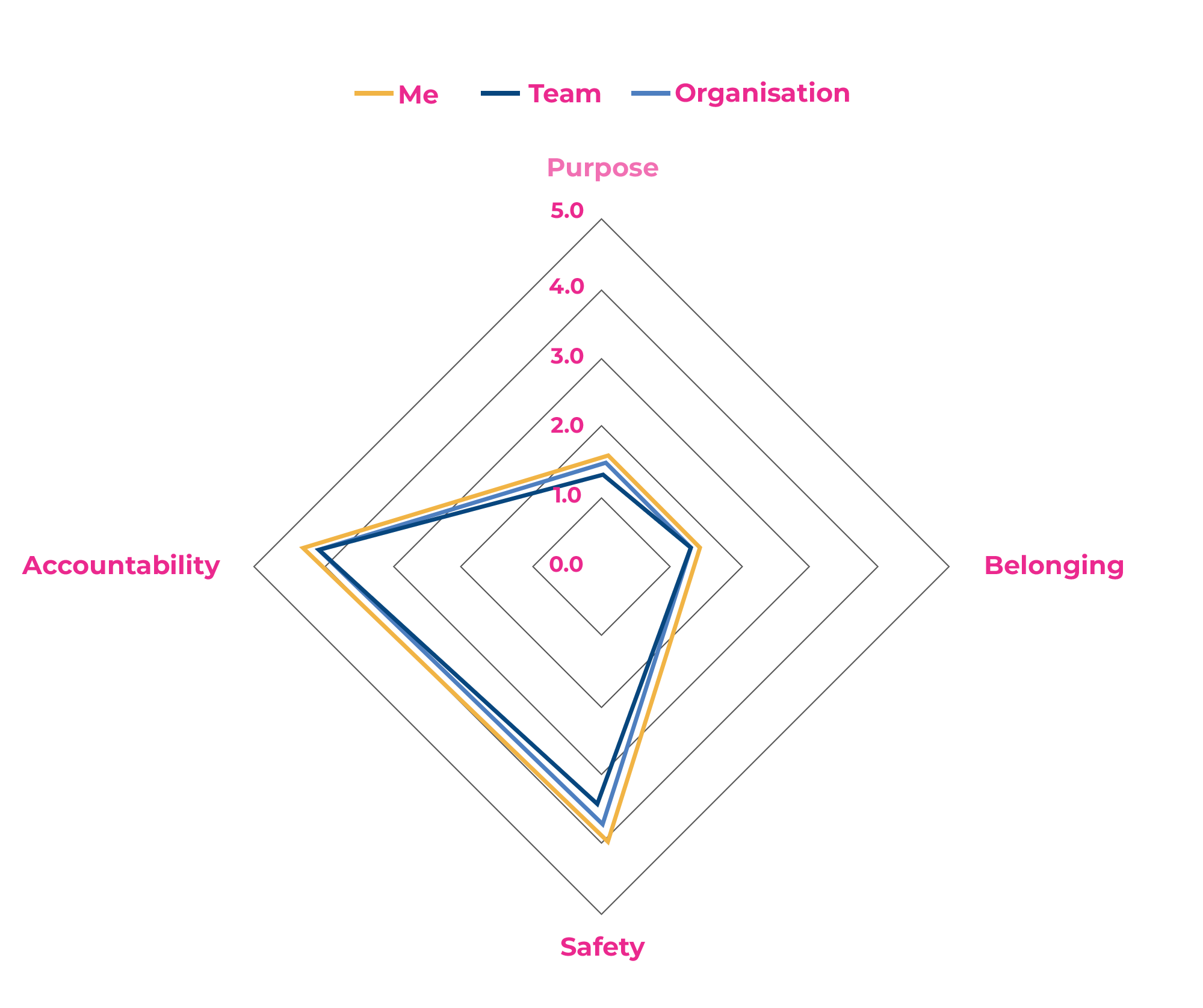
Safety and Accountability
(with weaker Purpose and Belonging)
Reliable delivery and open discussion, but low meaning and connection. Problems are talked about and work gets done, yet people feel detached from the wider purpose and from each other. Energy becomes functional rather than committed.
Quick pattern: Solid operations, low meaning; teams feel disconnected.
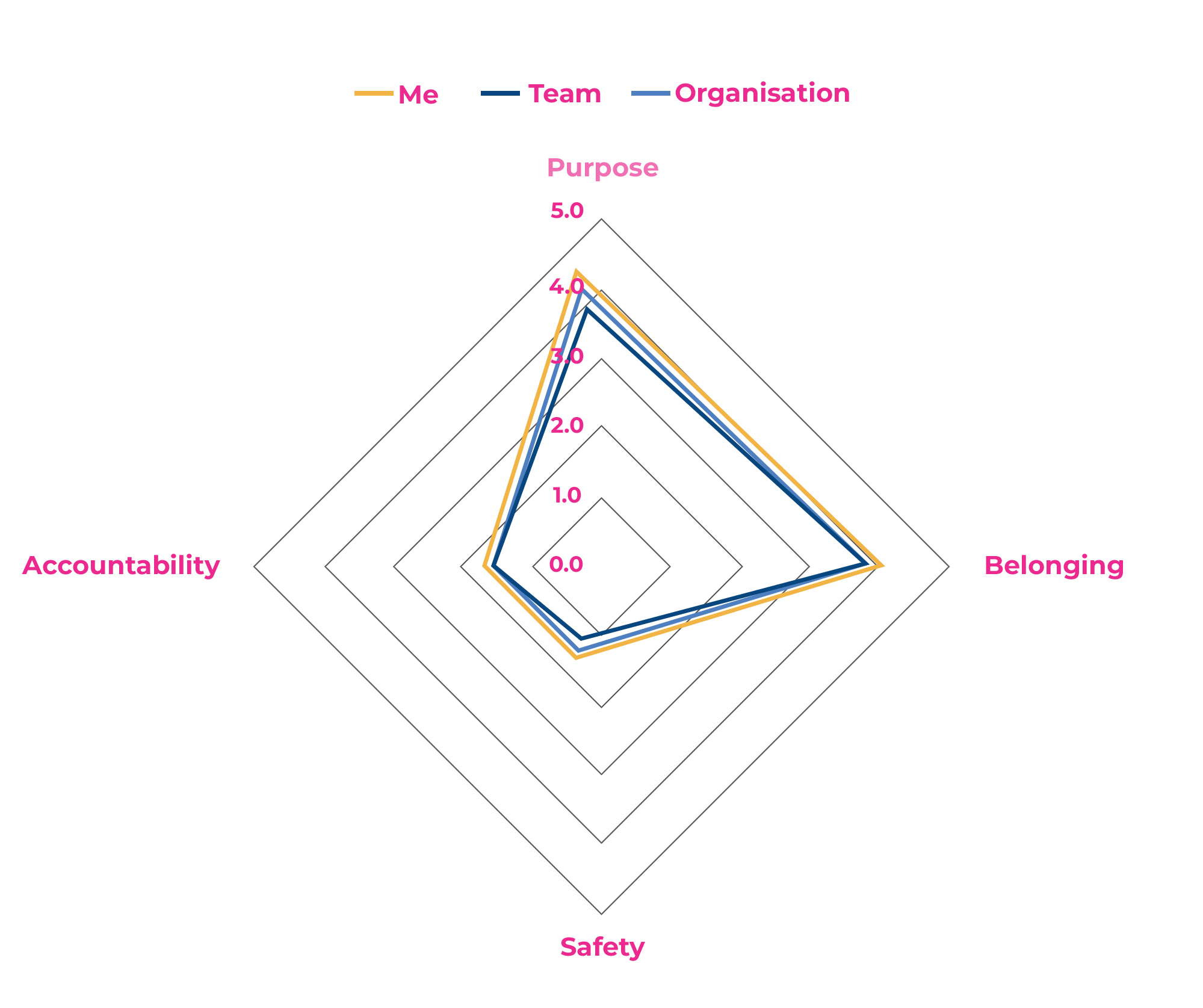
Purpose and Belonging (most common)
(with weaker Safety and Accountability)
Motivated, connected teams who believe in the work, but avoid the harder conversations. Feedback is softened or avoided, challenge feels risky, and a growth mindset struggles to take hold. Over time, performance plateaus and development slows, despite good intent.
Quick pattern: Motivated people who avoid tough feedback.
What this could look like in real life
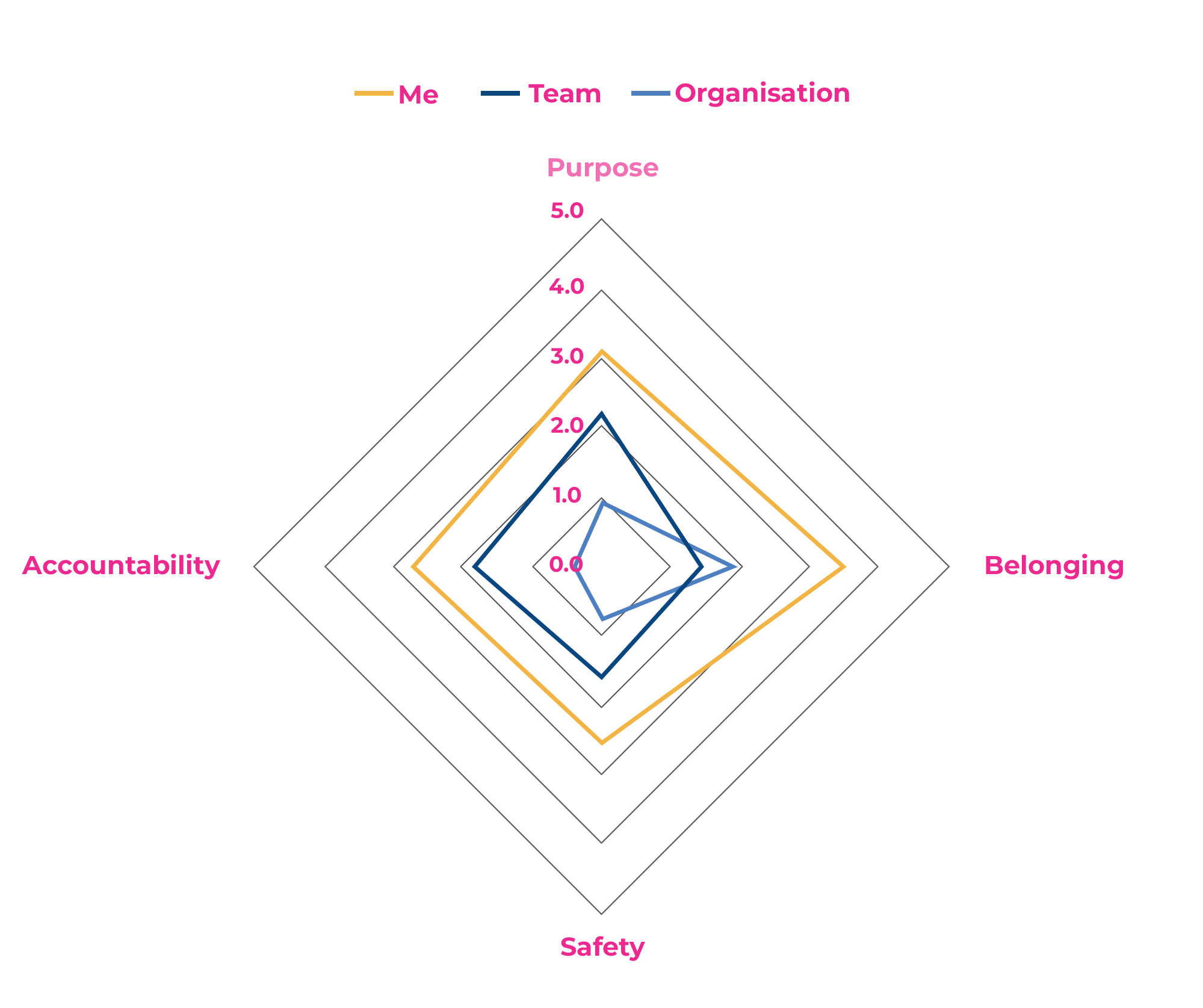
We often work with organisations that have a strong sense of purpose and a genuinely positive culture. People care, relationships are good, and there is real commitment to the work.
And yet, when pressure increases, performance still falls short.
The data often reveals what’s missing underneath: limited challenge, softened feedback, and unclear ownership. Difficult conversations are delayed, learning becomes cautious, and progress stalls, not because people don’t care, but because the conditions don’t support honest challenge and follow through.
What leaders often try:
When leaders recognise this pattern, they often respond by:
These actions are well intentioned...
but they rarely address the root cause.
What makes the difference:
Leaders addressing the environment that creates the underlying conditions:
Using the four pillars as a guide, leaders can take intentional action that reduces barriers and releases potential.
Why the Assessment Matters
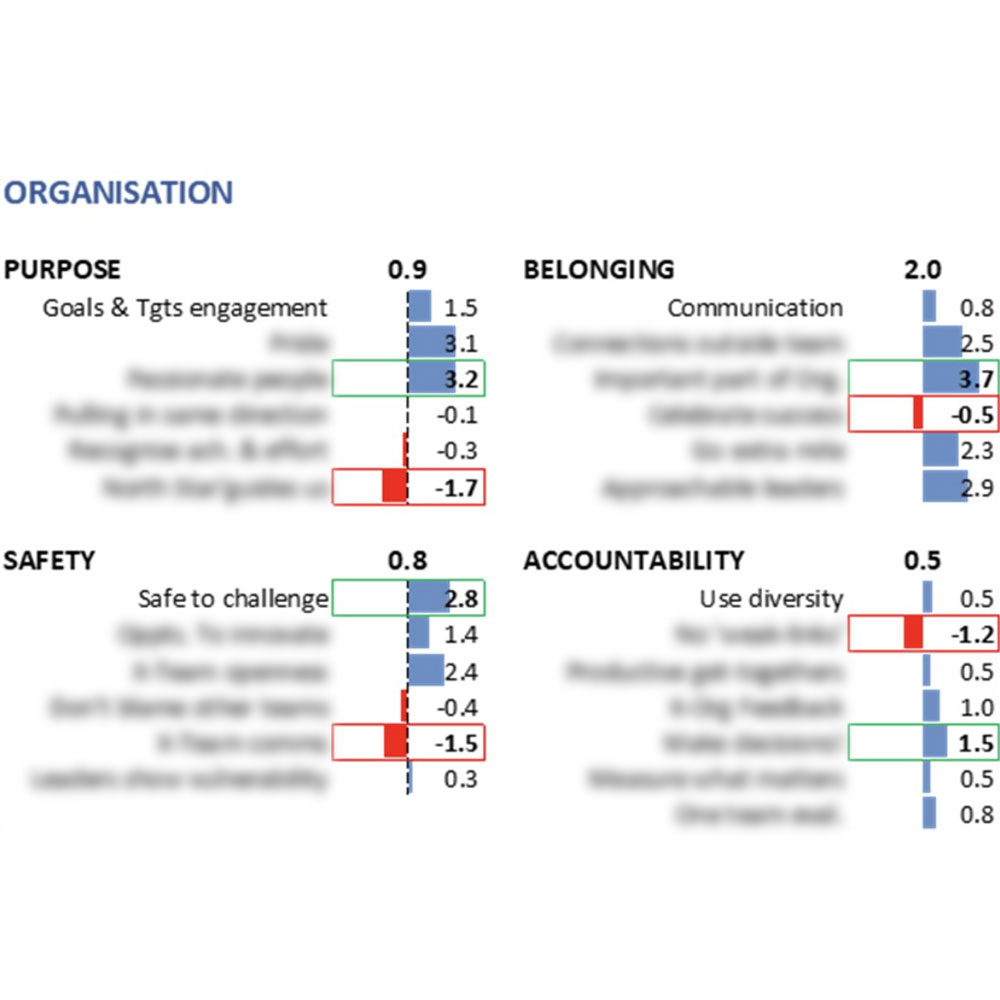
The data visualisation makes these patterns visible, showing where performance friction is coming from, and where changing the conditions will have the greatest impact.
This is what allows leaders to move from instinct and assumption to clear, focused action.
Your Next Step
If you recognise one or more of these patterns, the most useful place to start is by seeing your own system clearly.
Our free Four Pillars assessment gives you a simple, data led view of how these conditions are experienced across your organisation, and where small shifts will unlock the greatest performance gains.
To see how this approach works in practice, read our case study with Active Norfolk, where the Four Pillars assessment helped a leadership team identify what was really getting in the way of performance, and focus their efforts where it mattered most.

Are you ready?
Get in touch now to receive your free assessment
How can we help you?
Talk to us and see how we can help bring a humanistic approach to your personnel training